myOptigo Intelligence - Bringing AI Into Multi-family Loan Workflow
Sr. UX Design / Information Architecture · Freddie Mac Multifamily
Multifamily loan teams spend much of their day digging through loan files: finding the right rent roll, pulling numbers out of it, and cross-checking them against other documents. myOptigo Intelligence is an AI assistant that does the heavy lifting while people stay in control of the decisions. Users can ask policy questions in plain language, or run a skill, a guided workflow that fetches a loan's documents, extracts and compares the data, and produces a report to review. It was also the first project in our organization where designers handed off working code instead of a design file.
Out of respect for Freddie Mac's confidentiality, the screens below are wireframes I redrew using IBM's open-source Carbon design system, with the product labeled myOI. All data is placeholder.
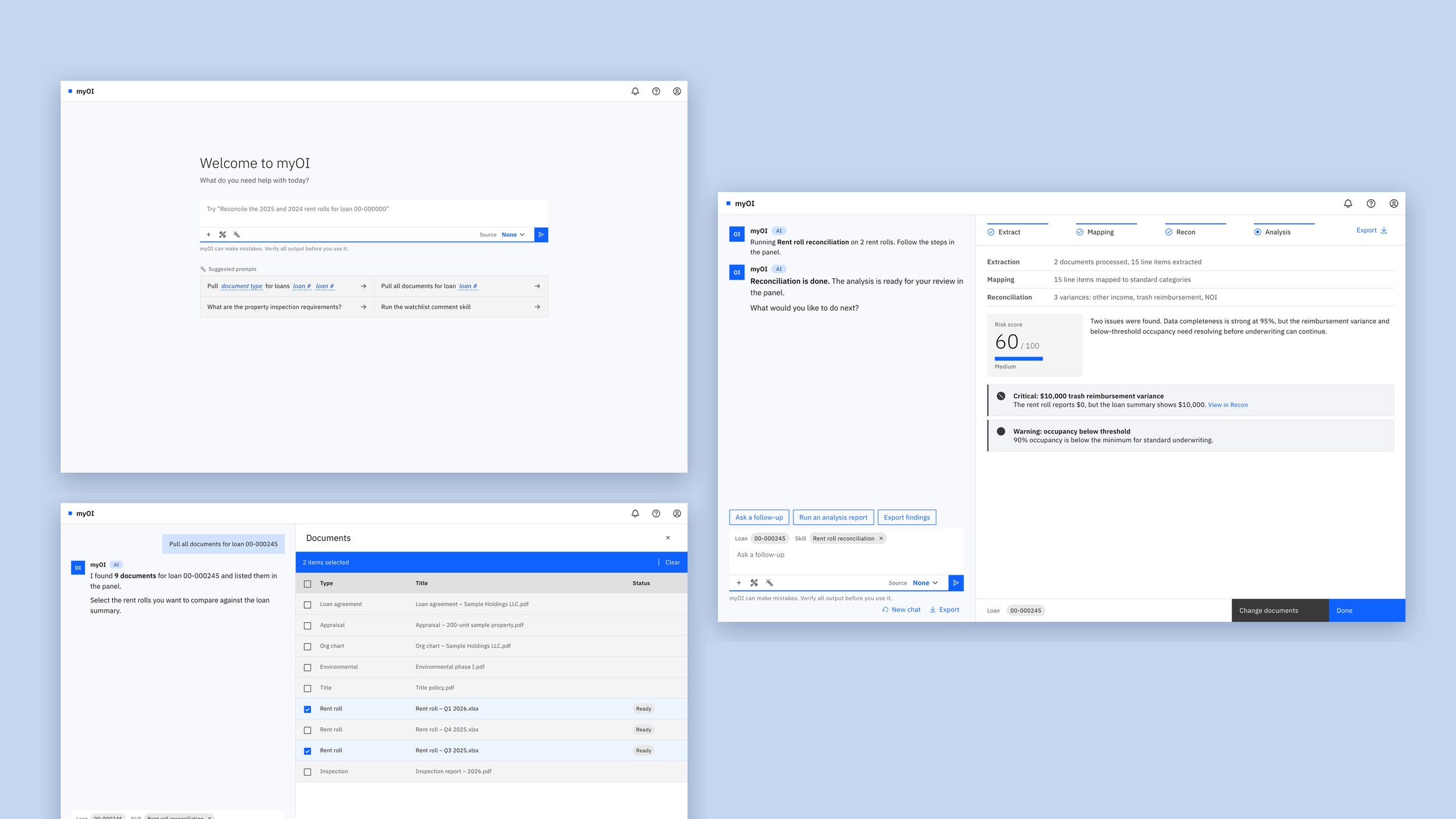
I led the UX strategy for bringing AI into multifamily loan work: defining how staff engage with AI, guiding product and engineering through each pivot, and introducing a working-code handoff that set the precedent for AI workflows across the division.
The Challenge:
myOptigo Intelligence had two jobs that pull in different directions: open-ended chat against the policy guide, and structured, multi-step work on a specific loan, where the AI needs exact inputs and the user needs to check every step. Both had to feel like one experience.
Extreme pressure for speed. Leadership wanted a pilot in front of users quickly.
No dedicated user research. Product owners owned the requirements. UX role was to turn them into reusable components and interaction patterns, and to advise on UX tradeoffs.
A moving target. What the AI could reliably handle was being discovered in real time.
UX Approach:
1. Finding the front door
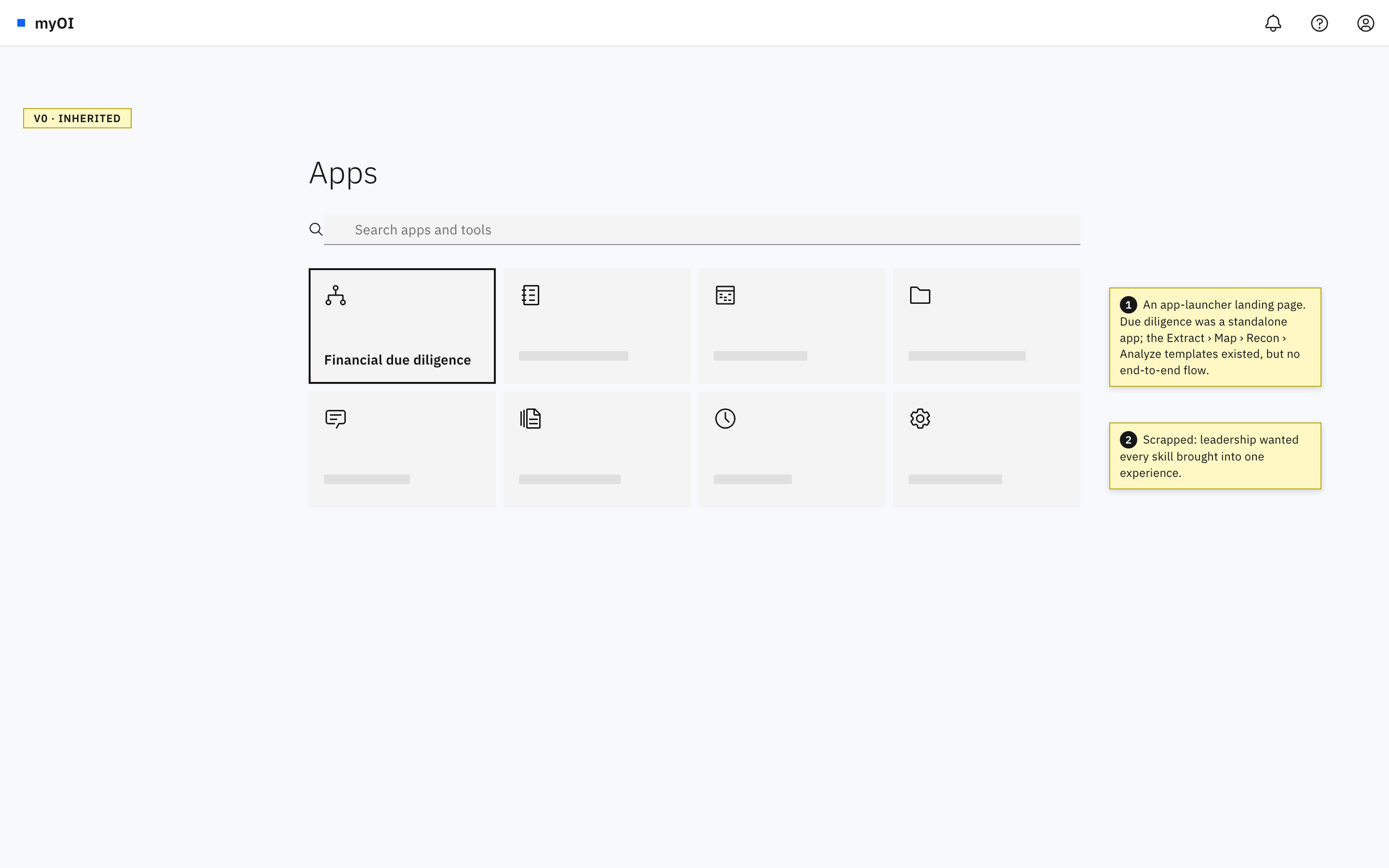
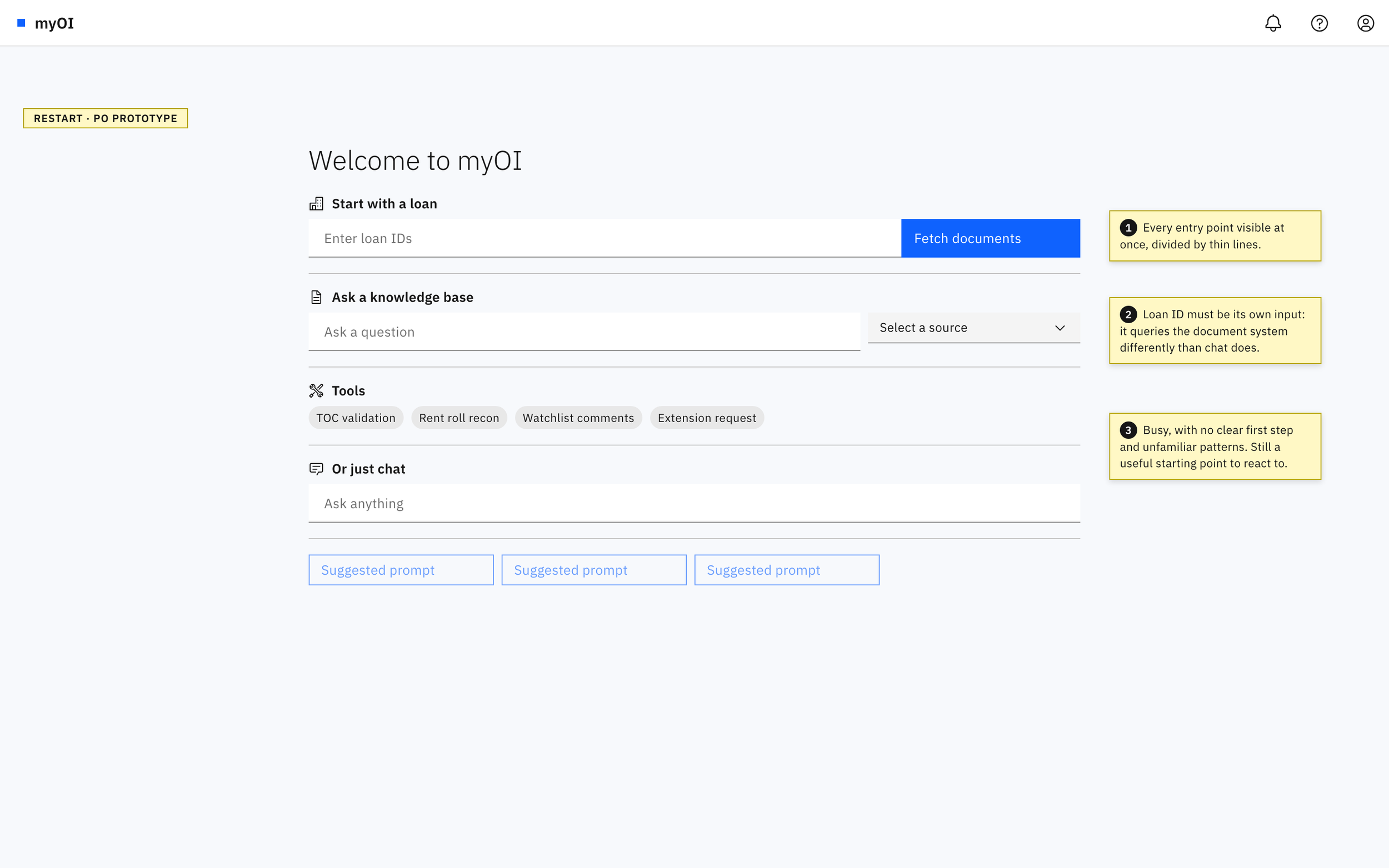
UX inherited a v0 landing page styled like an app launcher. Leadership then decided every skill should live in one experience, so we started over from a product owner prototype that put every entry point on the page at once. It was a good conversation starter, but it gave users no clear first step.
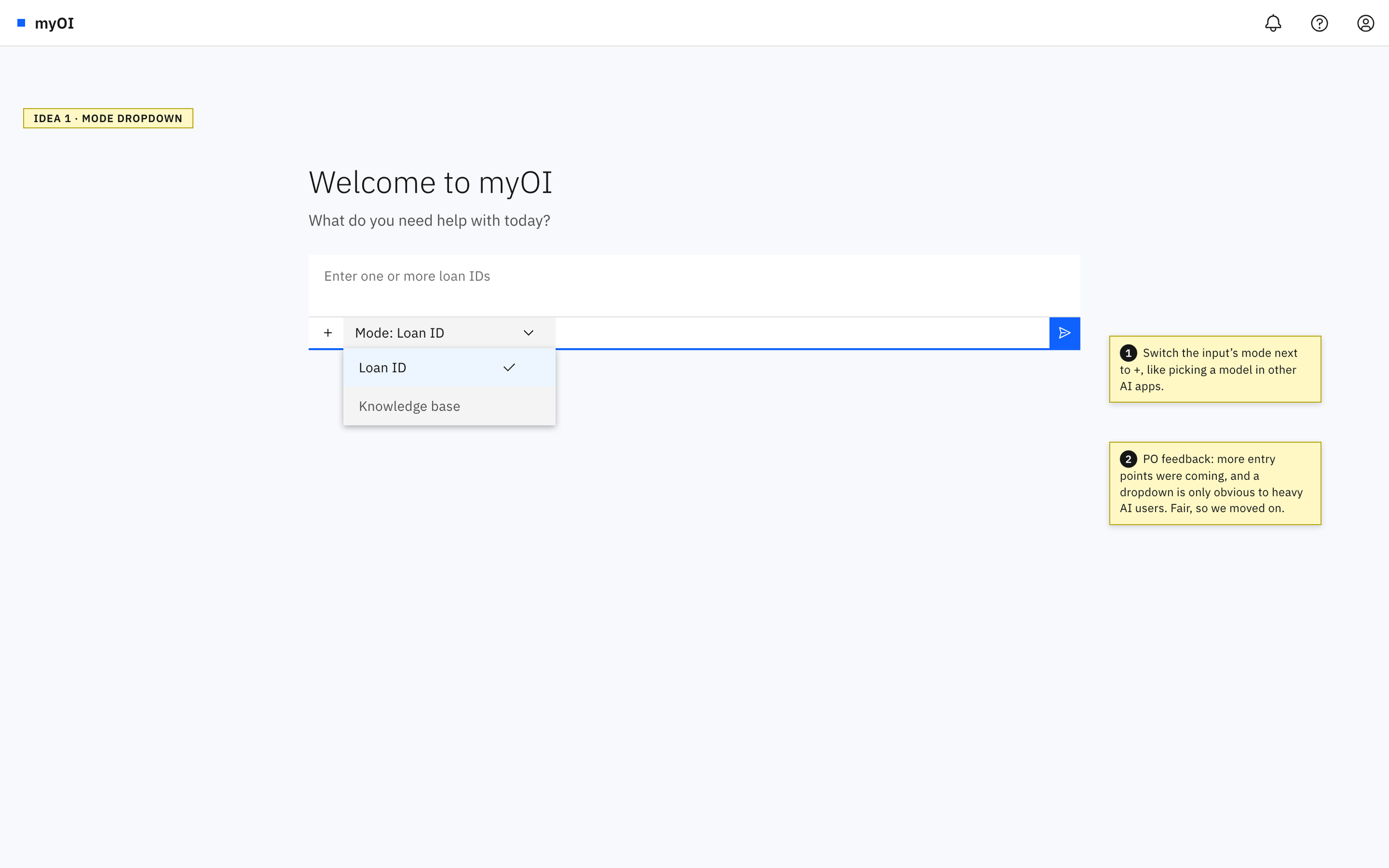
Idea 1 was a mode dropdown next to the + button. The product owner pushed back: more entry points were coming, and a dropdown is only obvious to heavy AI users.
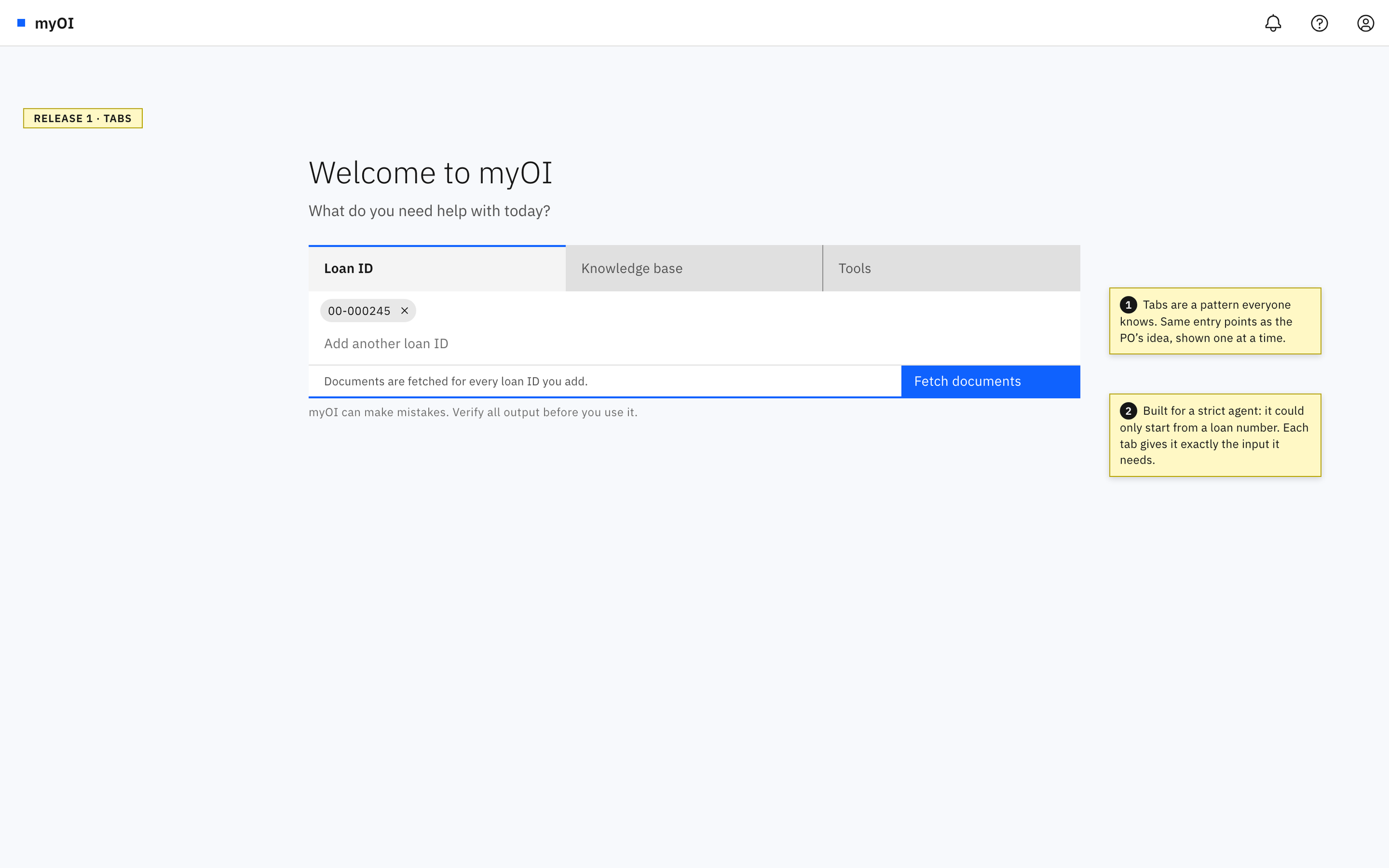
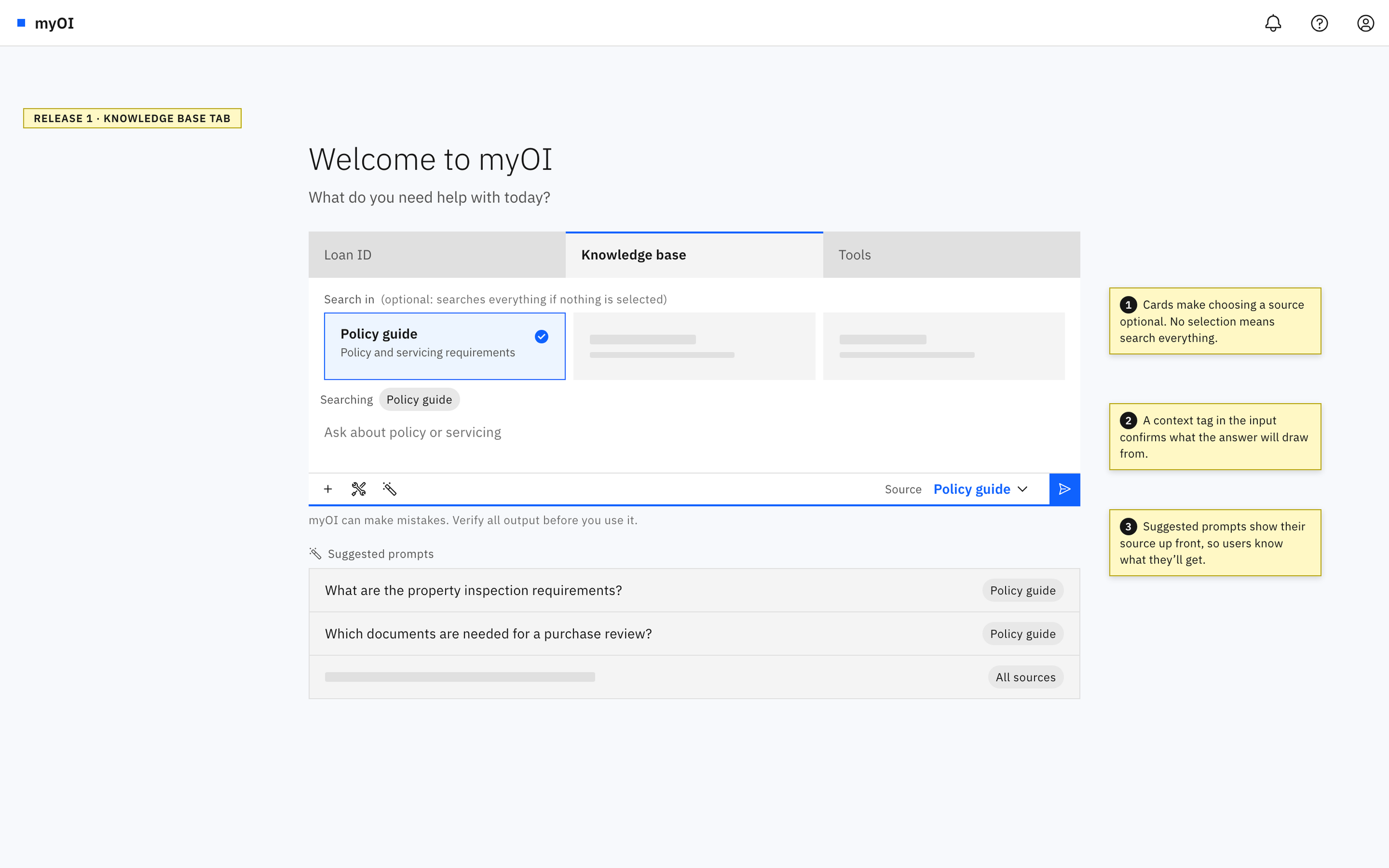
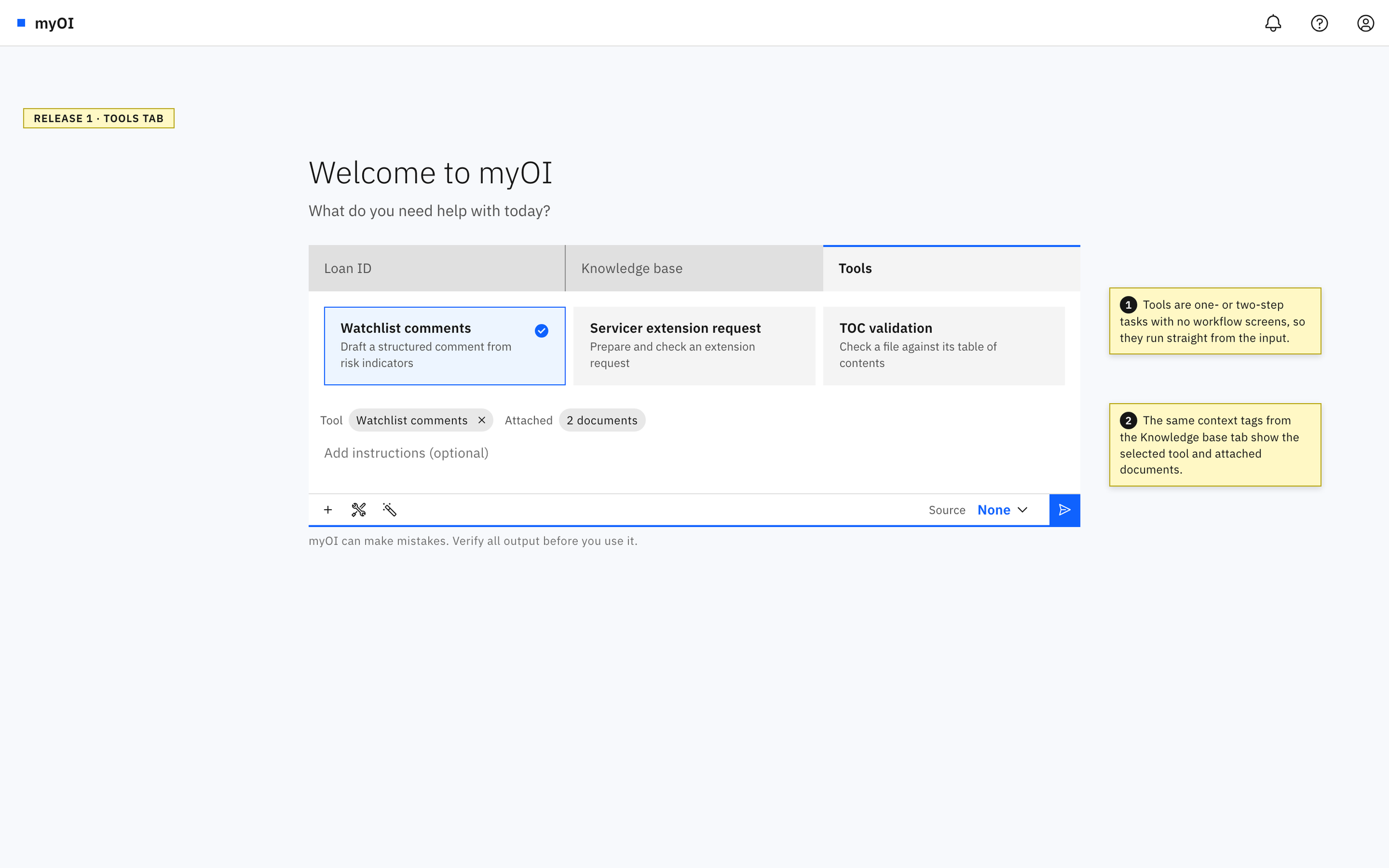
Release 1 used tabs for Loan ID, Knowledge base and Tools. Tabs are familiar, and they suited the agent we had then, which needed a loan number to start. Within them I designed the knowledge base cards and suggested prompts with context tags that show what an answer will draw from.
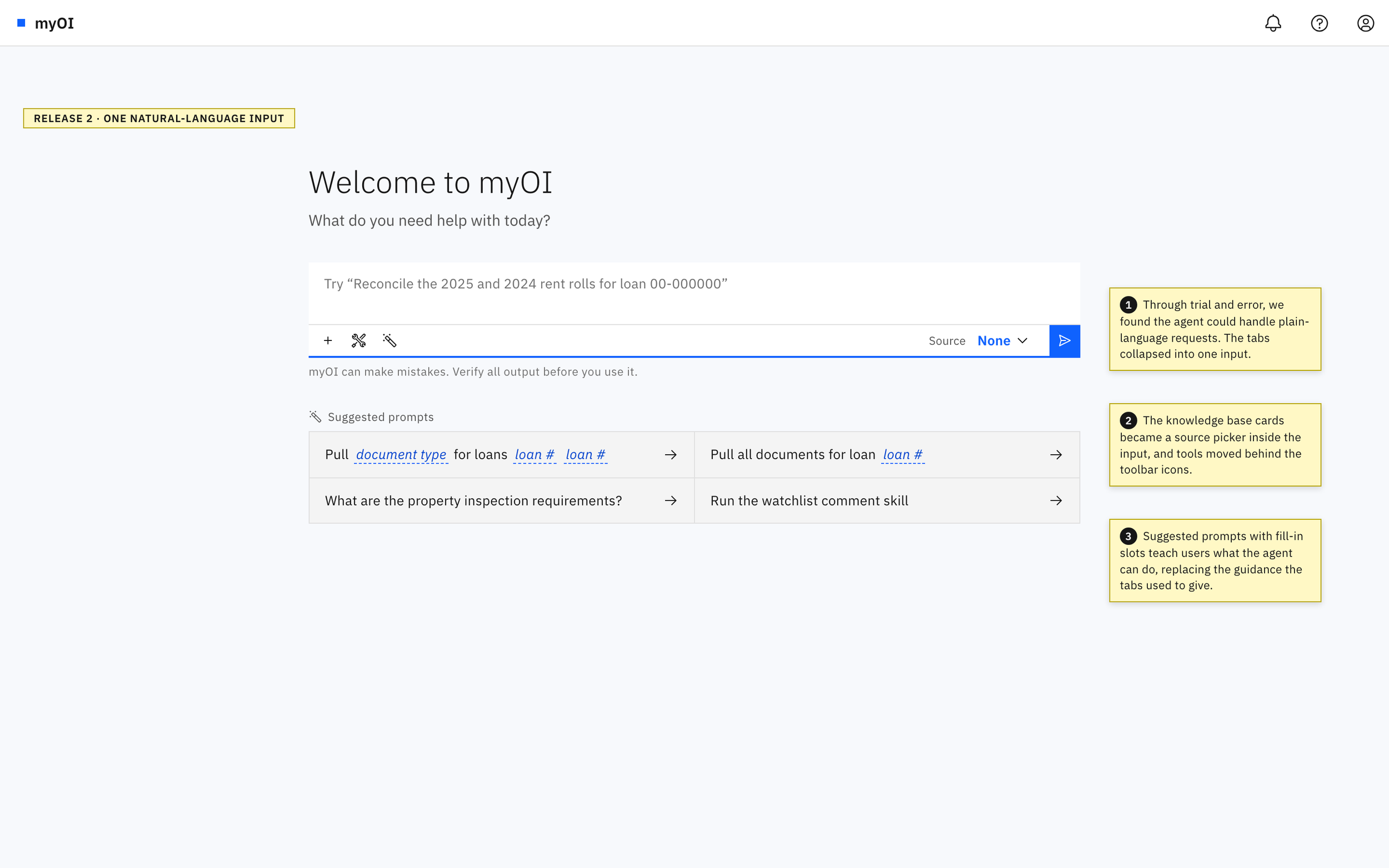
Release 2 opened up the front door. Through trial and error, we found the agent could handle plain-language requests. From one input, users can now prompt freely, add a skill, or choose a reference like the policy guide. Suggested prompts with fill-in slots now teach what the tool can do, a job the tabs used to do. Everything behind the landing page carried over from Release 1.
2. Skills with a human in the loop
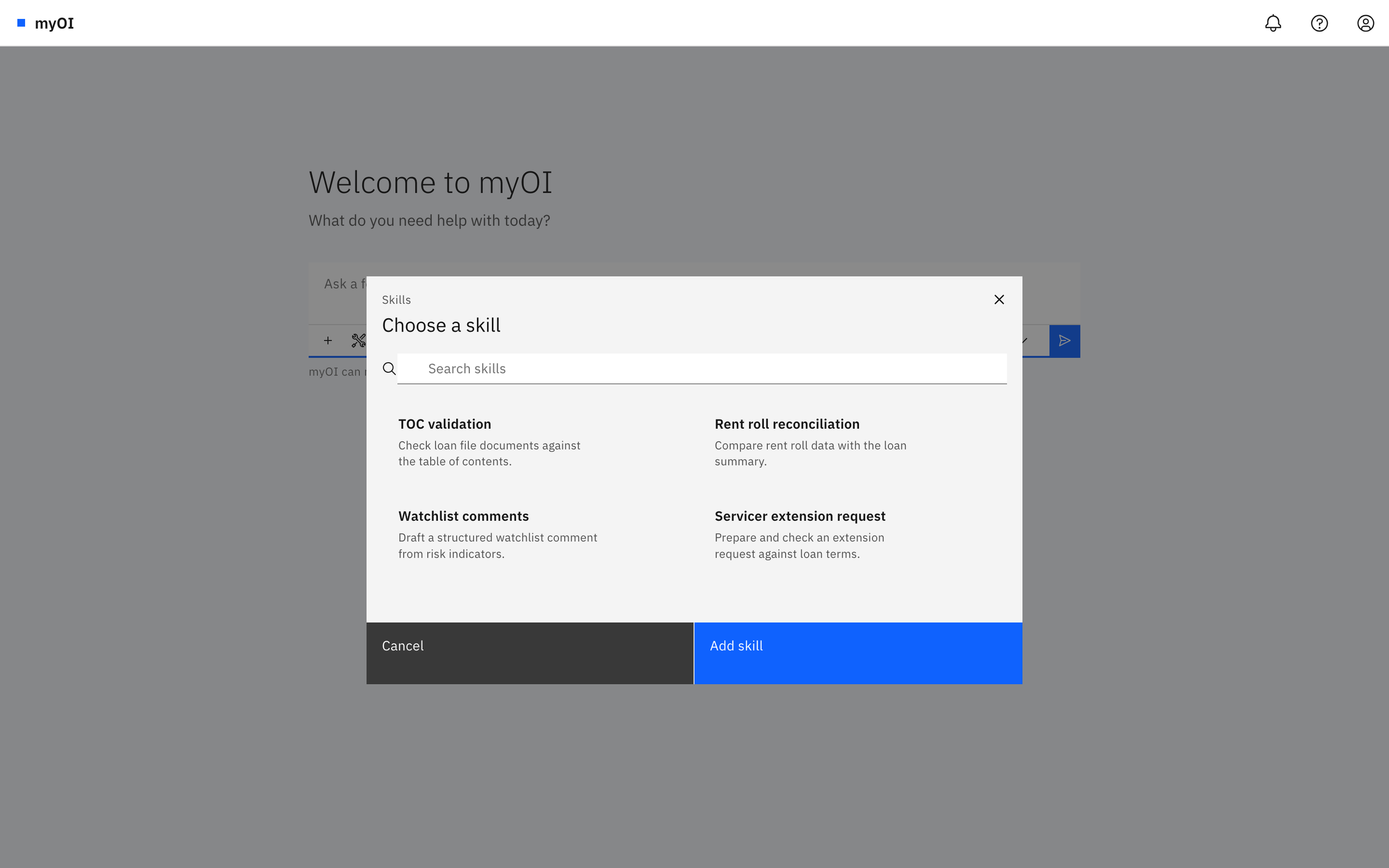
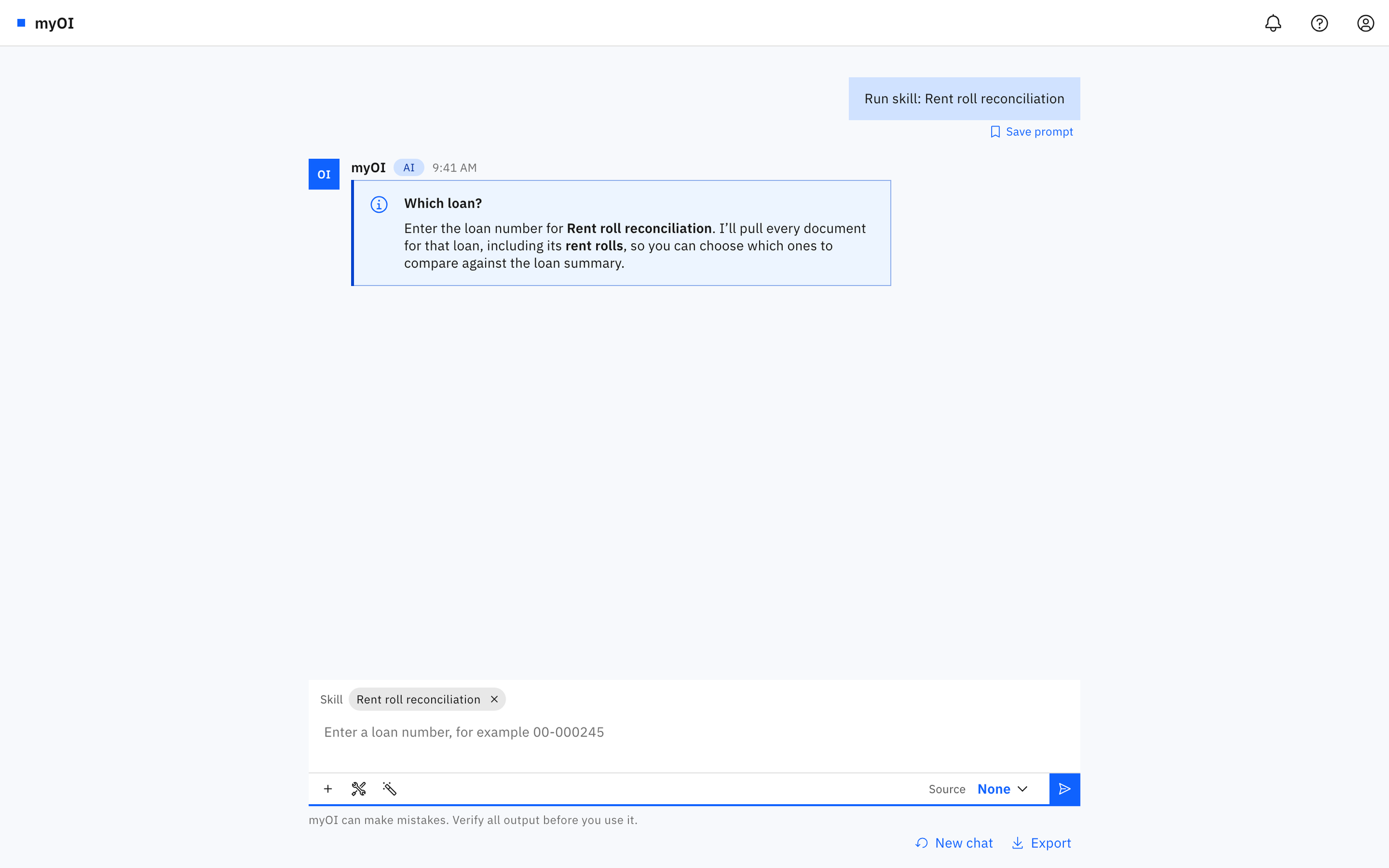
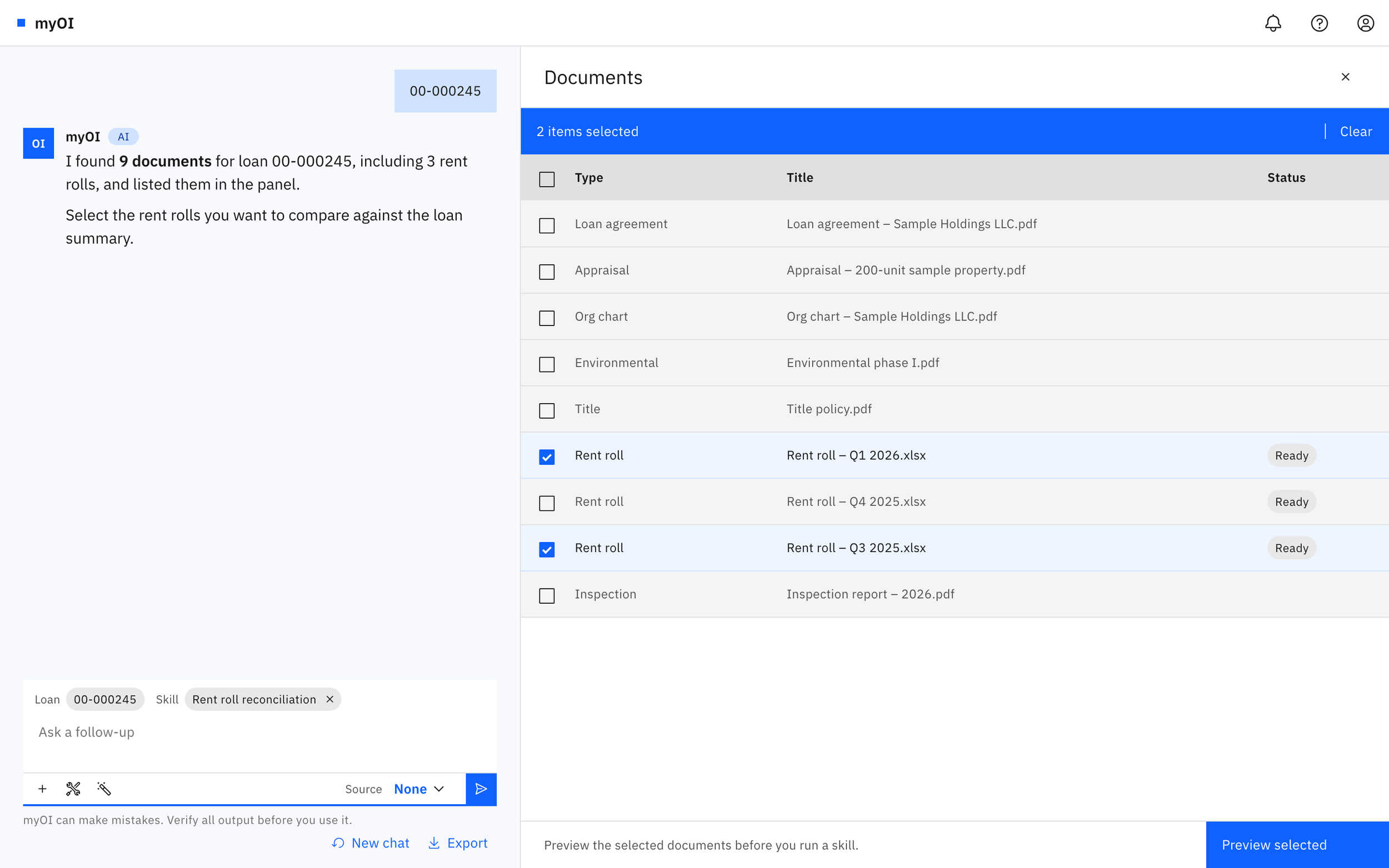
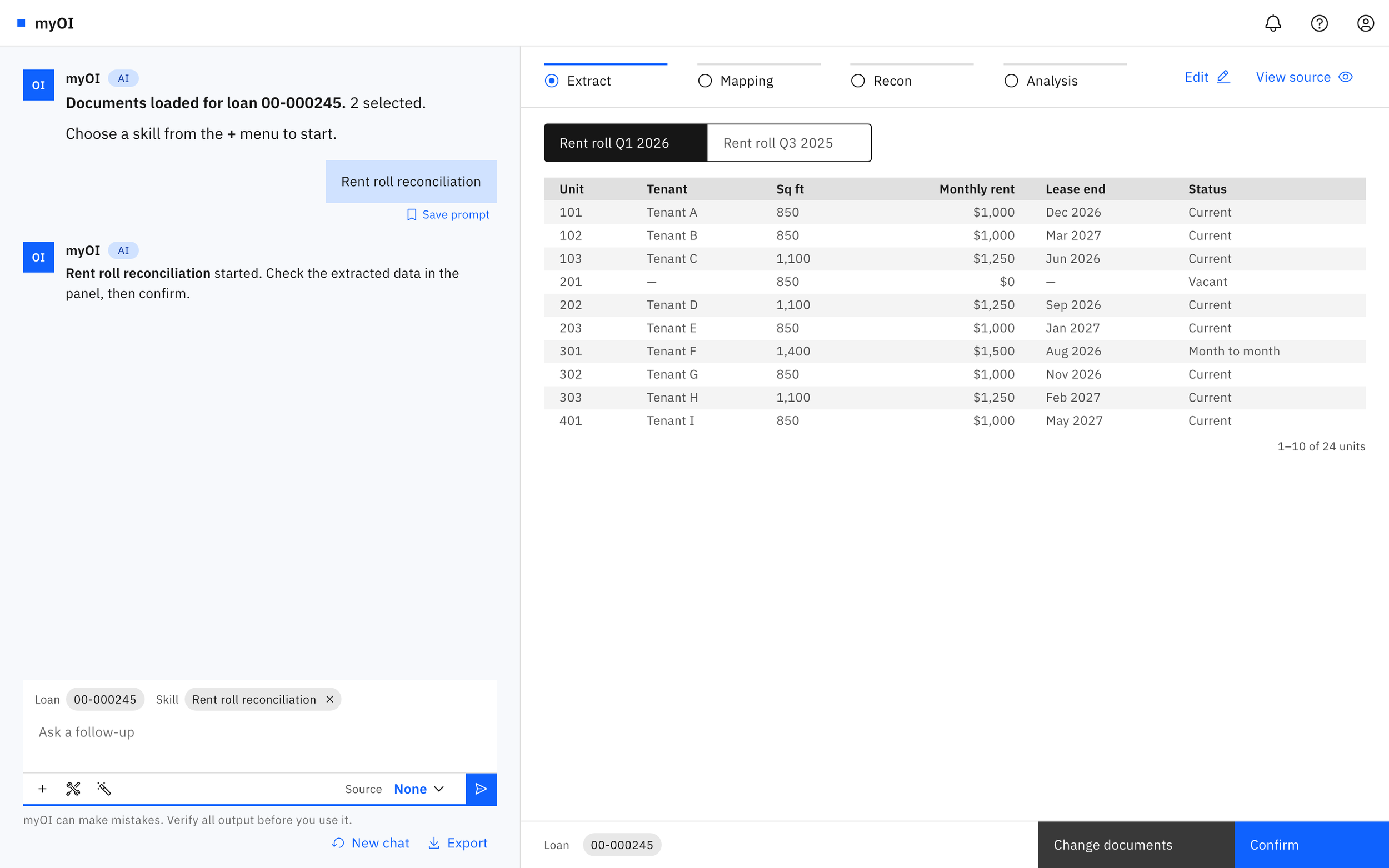
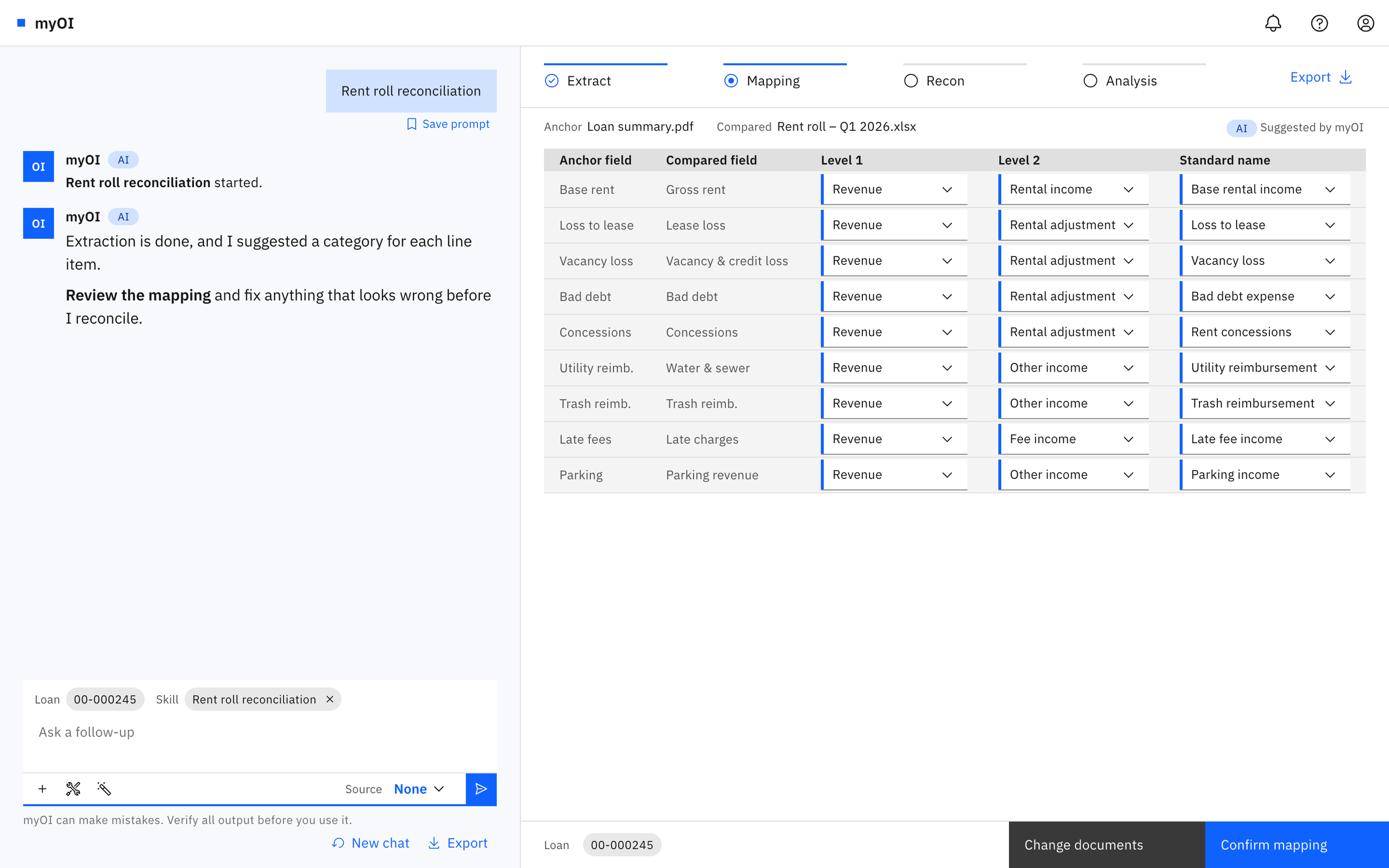
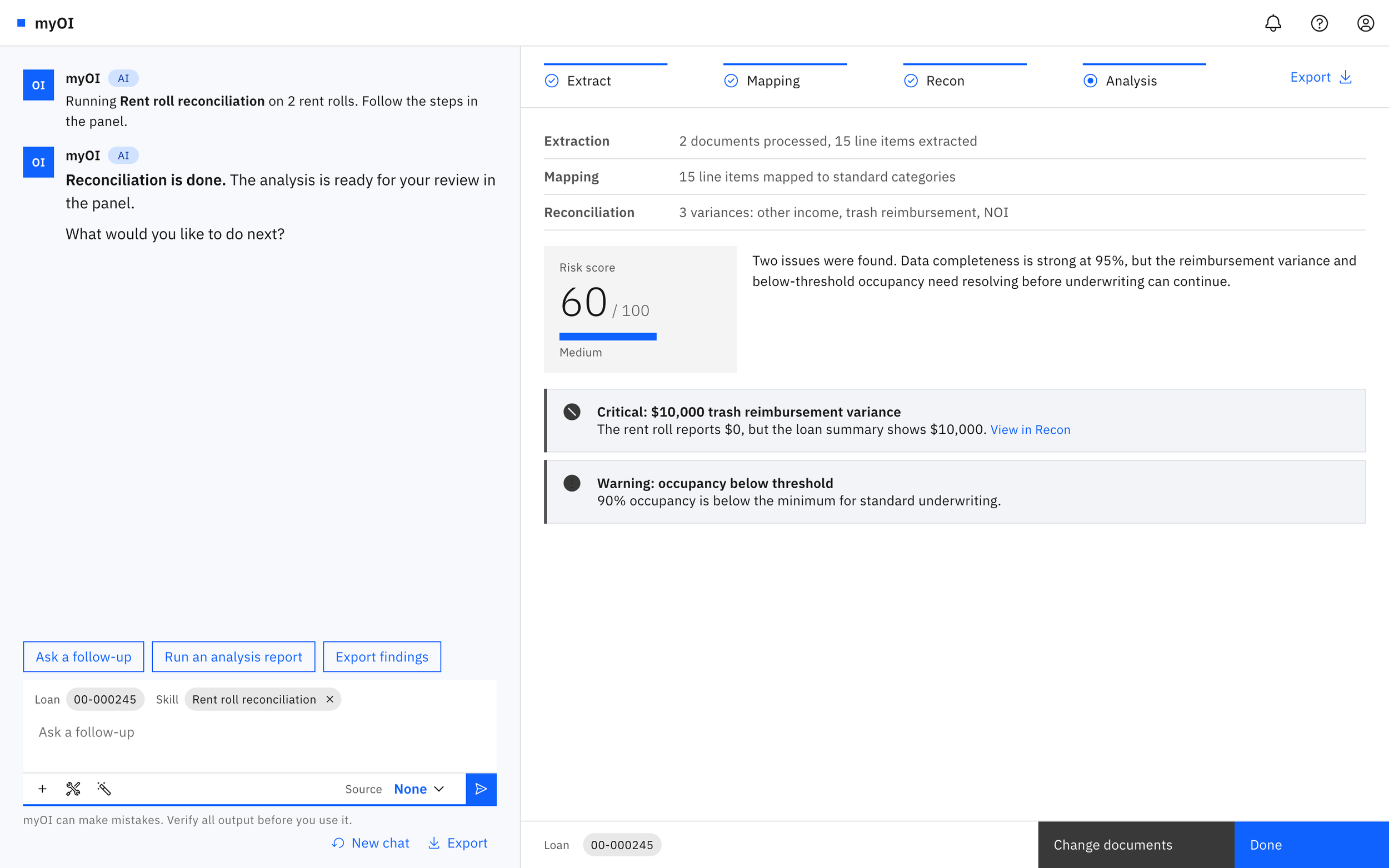
The rent roll reconciliation skill shows the pattern. myOptigo Intelligence says what it needs, fetches the loan's documents, and the user picks and previews the right ones. The work then runs in a side panel in four steps, Extract → Map → Reconcile → Analyze, while the chat stays open for questions. At every step, the user checks the AI's work, edits it, and confirms before moving on.
3. Chat history and trust
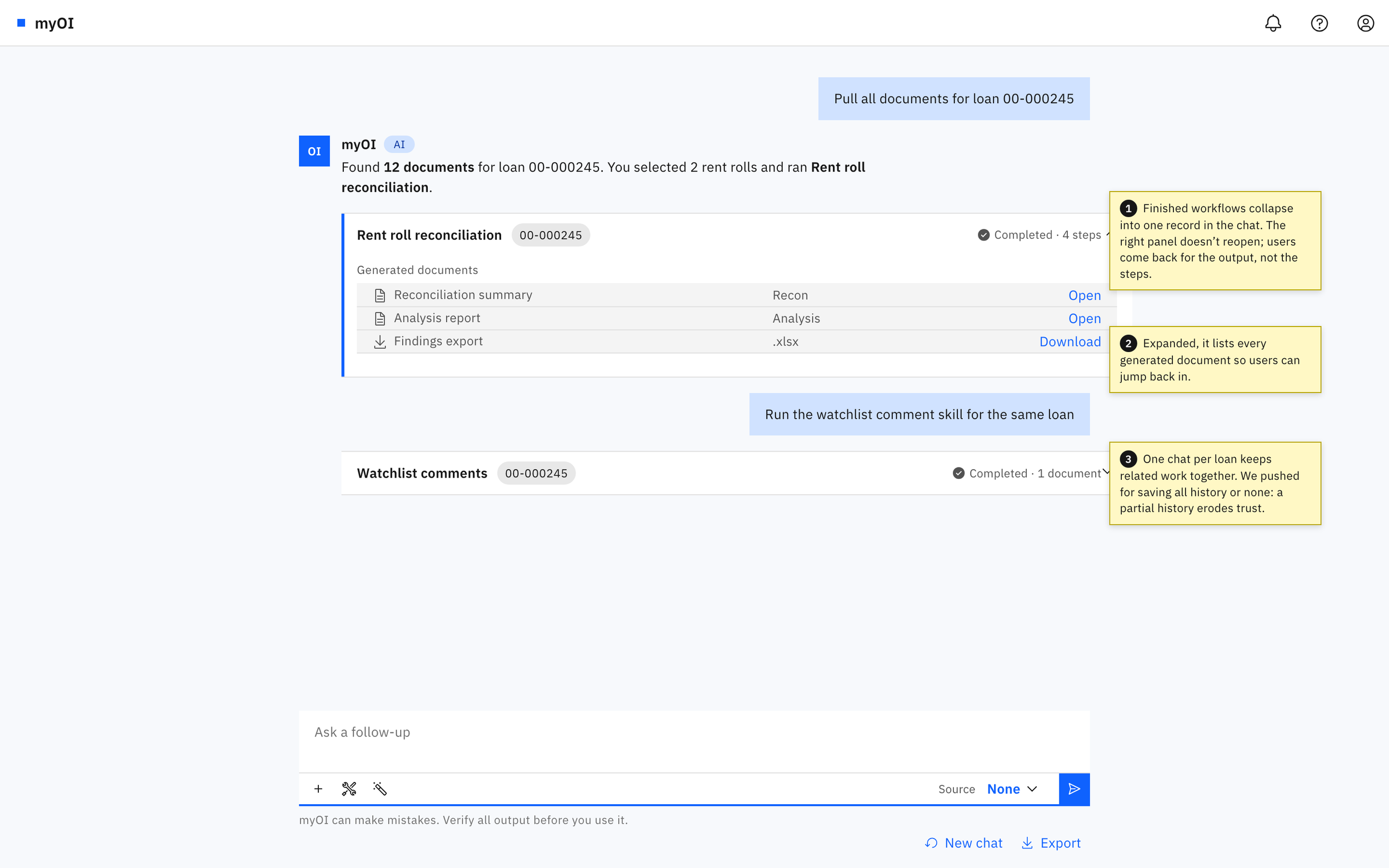
A finished run collapses into a single record in the chat that lists every document it produced, since users come back for the output, not the steps. When developers proposed saving history for only some features, I argued that a partial history would erode trust: it should be all or nothing.
4. Designing in code
With a fellow designer, I built the design directly in Angular using Kiro, an AI-assisted code editor, and we handed developers working code. What we learned:
Less gets lost in translation. Developers didn't have to rebuild the design from Figma files or screenshots, so what shipped stayed close to the design.
Speed made the pivots possible. A real prototype let us test what the AI could handle and change course fast, which is how Release 2 happened.
Designers and developers think about deliverables differently. We delivered the whole experience each time; developers needed to know what changed. We now share commit notes that list exactly what changed, and we're still refining this new kind of handoff.
Designers became multipliers. Several innovation teams across the Multifamily division forked our code for their own proofs of concept, and our work set the precedent for AI-assisted workflows in the division.
Where It Stands
myOptigo Intelligence launched to a pilot of 25 underwriters in September 2026. Early feedback centered on having every loan document in one place, and on getting policy answers in seconds.
Next up is an org chart skill that extracts borrower information from an uploaded organization chart, in any format, into the format our enterprise system expects. Longer term, myOptigo Intelligence is expected to be integrated into myOptigo, the division's primary loan application, in late 2027.